
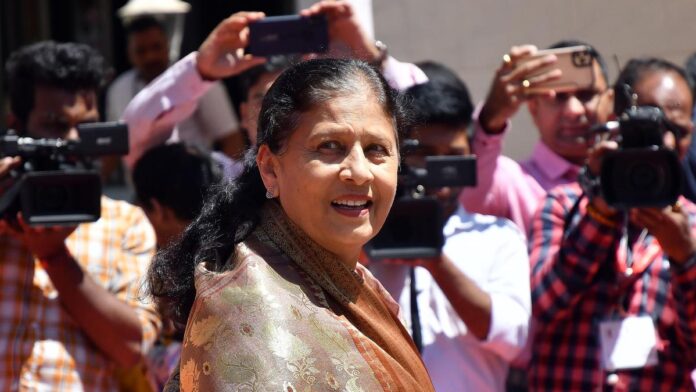
The controversial policy mandates that students in Class 9 and beyond learn three languages
Former Maharashtra Minister Fauzia Khan has taken a significant step by filing a plea in the Supreme Court against the Central Board of Secondary Education’s (CBSE) recent three-language policy for Class 9 students. The plea, submitted in response to a circular issued on May 15, 2023, argues that the new directive is both arbitrary and unreasonable, raising important questions about educational policy and student rights.
The controversial policy mandates that students in Class 9 and beyond learn three languages, which has sparked a fierce debate among educators, parents, and students alike. Khan’s primary concern revolves around the potential impact of this rule on students’ academic choices and their overall educational experience. She contends that such a rigid framework does not accommodate the diverse linguistic backgrounds and preferences of students across India.
The plea highlights that the three-language policy could create unnecessary stress for students who may already be grappling with the academic pressures of secondary education. Khan believes that the enforcement of this rule fails to consider the varied regional languages and dialects that students come from, potentially disadvantaging those who may not have equal access to resources for learning additional languages.
Additionally, Khan’s plea emphasizes the timing of this policy’s introduction. As students transition into the crucial years of their education, the sudden implementation of such a requirement could lead to confusion and inefficiency in learning, she argues. Educational stakeholders are now closely monitoring the developments surrounding this case, as the outcome could have lasting implications for the future of language education in India.
Implications of the Three-Language Policy
The three-language formula is not a new concept in Indian education; it has been part of the National Policy on Education since the 1960s. However, the recent circular by the CBSE has re-ignited discussions regarding its applicability and implementation in contemporary school systems. The guidelines state that students should learn one language from their mother tongue, one from the country’s national languages, and a third international language. While the intent is to promote multilingualism, critics argue that the policy may not be effectively tailored to the diverse linguistic landscape of the nation.
Khan’s opposition to the ruling reflects a broader concern among many educators who believe that this policy may inadvertently stifle individual choice and hinder students’ ability to excel in subjects of their passion. The legal challenge comes at a time when educational authorities are called upon to balance the ideals of linguistic proficiency with practical, accessible learning pathways for all students.
The response from CBSE and the education ministry to Khan’s plea remains to be seen, but the case has already garnered attention from various quarters, including policymakers, educational advocates, and parents. Understanding the diverse opinions on this issue sheds light on the multifaceted role language plays in education and identity in India.
What This Means for Educational Policy
As the Supreme Court prepares to hear Khan’s plea, the educational community is keenly awaiting the implications of this ruling. If the court finds the three-language policy to be unconstitutional or unenforceable, it could prompt a reevaluation of language education across the board, potentially leading to more localized and flexible approaches to language learning.
With ongoing debates around educational reforms and curriculum standardization, this case could serve as a pivotal moment for advocating for student-centered policies that are sensitive to the linguistic realities of India’s diverse student population. Educators and policymakers alike may need to reconsider how they formulate and implement language-related educational policies to ensure inclusivity and relevance in an increasingly globalized world.
In this evolving landscape, the importance of listening to voices from various sectors of society—such as educationists like Fauzia Khan—cannot be overstated. As India continues to grapple with the complexities of language education, developments in this legal battle may help guide future decisions to foster an environment where every student can thrive academically without language barriers hindering their progress.
The role of language in shaping identity and access to opportunities is a deeply intertwined aspect of educational equity, and this case underscores the need for a nuanced approach to language policies. As discussions unfold within the Supreme Court, it is vital to recognize that the outcomes will resonate far beyond the immediate realm of education, influencing how future generations engage with language and culture.
Potential Outcomes and Repercussions
The Supreme Court’s ruling on Khan’s plea could have far-reaching consequences not only for the CBSE but also for other educational boards across India. A decision against the policy may prompt a cascade of changes in how languages are taught at the primary and secondary levels, possibly leading to a re-examination of existing curricula and teaching methodologies.
In a country as diverse as India, where multilingualism is often the norm, it is crucial that educational policies reflect the reality of students’ lives. By fostering an inclusive approach to language learning, educational authorities can support a diverse array of linguistic identities while helping students develop vital communication skills necessary for navigating a globalized world.
As the educational landscape continues to evolve in response to societal needs, it is clear that the conversation surrounding language education will remain a relevant and significant issue. Advocates for student rights, educational reformers, and policymakers will need to collaborate closely to ensure that the policies implemented serve the best interests of all students, equipping them with the tools they need to succeed in their academic and professional journeys.
As the legal proceedings unfold, the educational community remains hopeful that a balanced resolution will emerge—one that champions students’ rights while acknowledging the importance of multilingualism in an increasingly interconnected world.

 recent three-language policy for Class 9 students.)