
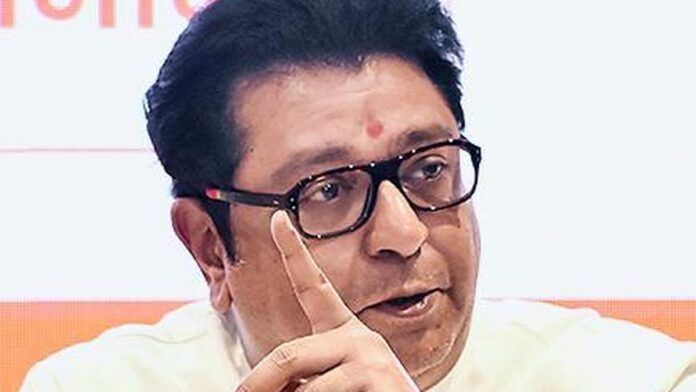
Raj Thackeray has demanded that an IPS officer resign if they support the RSS or BJP, triggering a debate on political neutrality and civil service ethics.
Maharashtra Navnirman Sena (MNS) chief Raj Thackeray has triggered a political controversy after stating that any Indian Police Service (IPS) officer who openly sympathises with the Rashtriya Swayamsevak Sangh (RSS) or the Bharatiya Janata Party (BJP) should resign from government service. His remarks have reignited a wider debate on whether civil servants should publicly express political preferences while holding constitutional office.
Speaking at a public gathering, Thackeray argued that government officials are expected to remain politically neutral. According to him, if an officer wishes to openly advocate for a political ideology or organisation, they should first leave public service.
Why did Raj Thackeray make these remarks?
The controversy began after an IPS officer reportedly made comments that Thackeray interpreted as reflecting support for the RSS and the BJP. Although the officer’s identity has not been publicly disclosed, Thackeray maintained that such statements could undermine public confidence in the impartiality expected from law enforcement officers.
He said that anyone who personally supports the RSS should “keep it in your heart” while serving the government, stressing that public duty must take precedence over personal political beliefs.
Why political neutrality matters for civil servants
Civil servants, including IPS officers, are expected to implement the law impartially, irrespective of the political party in power. Political neutrality is regarded as one of the cornerstones of professional public administration in India.
Thackeray’s remarks have reopened the discussion on whether public officials should refrain from making statements that could create an impression of political bias, even if those views are expressed in a personal capacity.
Supporters and critics remain divided
The remarks have drawn sharply contrasting reactions.
Supporters argue that Raj Thackeray is defending the integrity of the civil services by insisting that officers maintain complete political neutrality. They believe any perception of political affiliation can weaken public trust in policing and governance.
Critics, however, contend that his statement raises concerns about freedom of expression. They argue that civil servants are also citizens who possess personal political opinions, provided these do not interfere with their official responsibilities.
The episode reflects the increasingly polarised nature of Indian politics, where even perceived political leanings can become matters of public controversy.
Who is Raj Thackeray?
Raj Thackeray is the founder and president of the Maharashtra Navnirman Sena (MNS). He launched the party after splitting from the Shiv Sena and has built his political identity around Marathi regional interests and the protection of Maharashtra’s cultural and economic identity.
Known for his outspoken speeches, Thackeray frequently comments on issues relating to governance, law enforcement and state politics, making him one of Maharashtra’s most closely watched political figures.
What does this controversy mean?
The debate extends beyond one individual or one political party. It raises broader questions about:
- The political neutrality expected from civil servants.
- The balance between personal freedom of expression and official responsibility.
- Public confidence in the impartiality of law enforcement agencies.
- The relationship between politics and public institutions in a democratic system.
As political competition becomes increasingly intense, controversies involving serving government officials are likely to receive greater public and media scrutiny.
The broader political impact
Political neutrality within the civil services has long been debated in India. Allegations of political bias frequently emerge whenever senior bureaucrats or police officers make public remarks that are perceived as favouring one political ideology.
Raj Thackeray’s intervention could intensify demands for clearer guidelines governing political expression by serving officers. At the same time, it may further strengthen his image among supporters who favour a stricter separation between politics and public administration.
Whether the controversy ultimately benefits the MNS politically remains uncertain, but it has undoubtedly placed the issue of civil service impartiality back at the centre of public discussion.
Looking ahead
The controversy is likely to fuel further debate over the responsibilities of public servants in a politically divided society. While personal beliefs cannot easily be separated from individual identity, democratic governance depends heavily on public confidence that state institutions function without political favour or prejudice.
Finding the right balance between individual freedoms and institutional neutrality will remain a significant challenge for policymakers, civil servants and political leaders alike.

