
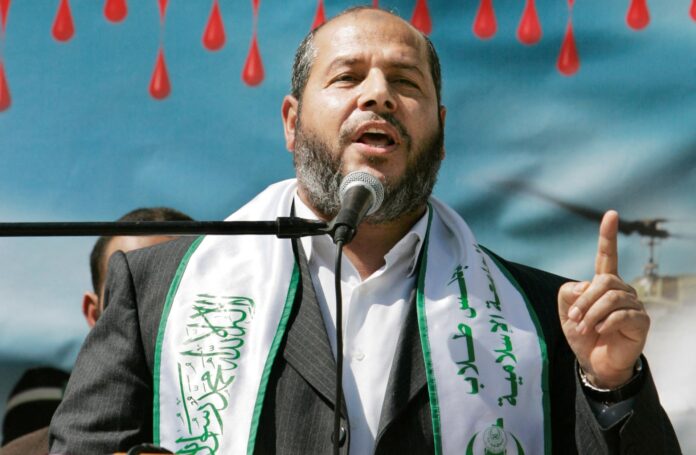
Khalil al-Hayya has been an active member of Hamas since the group’s inception in the late 1980s during the First Intifada.
Hamas has officially appointed Khalil al-Hayya as the head of its political bureau, marking a significant leadership change within the group. Al-Hayya, a prominent figure in Hamas, assumes the role at a time when the organization is navigating a complex political landscape both regionally and internationally. Understanding who Khalil al-Hayya is and what this leadership transition signifies is crucial for grasping the future direction of Hamas.
Born in 1963 in Gaza, Khalil al-Hayya has been an active member of Hamas since the group’s inception in the late 1980s during the First Intifada. Known for his resilience and political acumen, al-Hayya has spent years in leadership roles, notably in the Gaza Strip, where he has been pivotal in shaping the organization’s policies. His recent election comes after a significant period of political maneuvering within Hamas, highlighting the internal dynamics of the group as it faces growing pressure from both Israel and the Palestinian Authority.
The transition to al-Hayya’s leadership follows the tenure of Ismail Haniyeh, who has been a prominent figure in Palestinian politics and a key player in Hamas’s recent strategies. Al-Hayya’s elevation signals a potential shift in Hamas’s approach to governance, diplomacy, and military actions as it grapples with ongoing conflict and international isolation. The election took place within the context of internal party elections and reflects Hamas’s commitment to maintaining a unified front despite external pressures.
In his new role, al-Hayya faces immediate challenges, including the deteriorating humanitarian situation in Gaza, the ongoing conflict with Israel, and the delicate relationship with other Palestinian factions. Analysts suggest that al-Hayya’s leadership may steer Hamas toward a more pragmatic approach in dealing with longstanding grievances against both Israel and the Palestinian Authority. His history of engaging with various Palestinian political entities indicates that he might seek to foster cooperation, albeit with the typical Hamas emphasis on resistance.
Hamas has been under intense scrutiny following the recent escalation of violence in the region, particularly with the Israeli military response to rocket attacks from Gaza. Al-Hayya’s leadership comes at a critical juncture where he will likely focus on bolstering the group’s military capabilities while also addressing the urgent needs of the civilian population. The dual challenge of ensuring security and improving living conditions for Gazans will be paramount in his strategy.
Khalil al-Hayya’s experience is deeply rooted in the fabric of Hamas’s political and military structure. Having served as a member of the Palestinian Legislative Council for more than a decade, he has built a reputation as a staunch advocate for Palestinian rights. His election is emblematic of a broader trend within Hamas, which seeks to adapt to changing political realities while remaining steadfast in its core principles.
The broader implications of al-Hayya’s election extend beyond Gaza and the West Bank. Regional players such as Egypt, Iran, and Qatar, who have vested interests in Palestinian politics, will be closely monitoring how al-Hayya maneuvers the landscape. His ability to engage these countries could play a significant role in securing vital support for Hamas amid increasing isolation due to its governance style and militant actions.
In addition to international relations, al-Hayya’s leadership will likely influence Hamas’s approach to reconciliation with rival factions, particularly Fatah. The split between Hamas and Fatah remains one of the most significant barriers to Palestinian unity and effective governance. Al-Hayya’s experience in engaging with various political entities may provide an opportunity to bridge these divides, although this remains to be seen.
As the political climate in the Middle East continues to evolve, Khalil al-Hayya’s ability to navigate the complex realities of governance, resistance, and diplomacy will be closely scrutinized. His leadership is expected to steer Hamas through a transitional phase that could redefine its strategies and alliances in the region.
What This Means Going Forward
The election of Khalil al-Hayya as Hamas’s new leader represents both continuity and potential change within the organization. His extensive background in Palestinian politics and commitment to the group’s founding principles indicate a consolidation of Hamas’s approach to both internal governance and external relations. As his tenure unfolds, the effectiveness of his leadership will be measured against the backdrop of enduring conflict, humanitarian crises, and the quest for Palestinian unity.
Al-Hayya’s appointment has stirred discussions among various factions within Palestinian politics, reflecting the complex interplay between resistance and governance that characterizes Hamas’s mission. As the situation develops, it will be pivotal to observe how his leadership influences not only the fate of Hamas but also the broader narrative of Palestinian aspirations in the face of ongoing challenges.

