
Haryana government advances infrastructure and appeals for bipartisan support on women’s empowerment
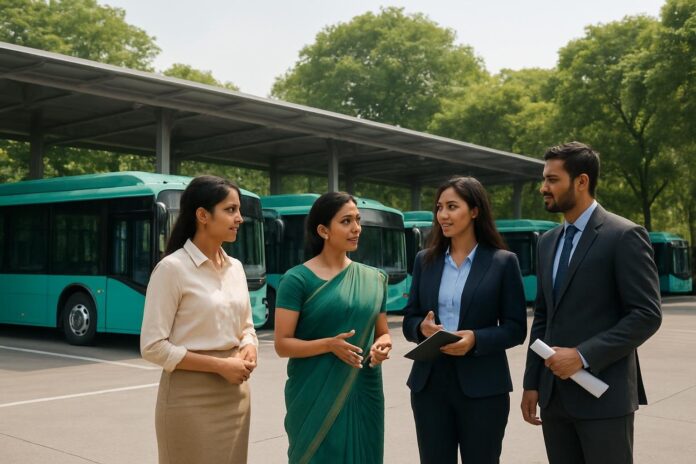
On 28 November 2026 in Gurugram, Haryana Chief Minister Nayab Singh Saini addressed pressing political and developmental topics. Highlighting the government’s commitment to modernisation under Prime Minister Narendra Modi’s vision, Saini unveiled an E-Bus Depot in Sector 48 and flagged off 100 electric buses, emphasizing the state’s transition towards sustainable and pollution-free public transport.
Accelerating green energy transition through new electric buses
The inauguration of the E-Bus Depot and introduction of electric buses marks a significant milestone in Haryana's efforts to reduce both air and noise pollution. According to the Chief Minister, shifting to electric-powered public transport aligns with broader environmental goals, contributing to cleaner air and a quieter urban environment. This development illustrates the ‘double-engine’ government’s focus on improving infrastructure rapidly by deploying modern green technologies.
Experts and planners often cite the adoption of electric buses as a crucial step towards meeting India’s climate and sustainable urban mobility targets. Haryana joins several other states harnessing green energy initiatives, driving both innovation and health benefits for growing metropolitan populations. Learn more about India’s public transport electrification efforts on the National Electric Mobility Mission portal.
Call for political unity on Women's Reservation Bill
Beyond infrastructure, the Chief Minister made a strong appeal to opposition parties, urging them to rise above partisan differences and back the Women’s Reservation Bill. He underscored the bill as a necessary and timely legislative measure to ensure women’s equitable representation in governance and decision-making processes.
Addressing the opposition directly, Nayab Singh Saini pressed for moving past narrow political interests to recognise women as vital partners in the nation’s development. He suggested that current opposition narratives lack substantive issues, sometimes resorting to falsehoods, and invited a broadminded stance especially from the Congress party to support the bill.
Women’s reservation in political spheres has been a longstanding subject of debate in India, with proponents arguing it corrects historical imbalances and enhances inclusivity. Parliamentary discussions and prior reports on the Women’s Reservation Bill elaborate on its intended impact and the rationale for nationwide implementation.
"The opposition must rise above party politics; women deserve an equal share in development," said CM Nayab Singh Saini.
Context within Haryana and India’s broader development trajectory
This statement by the Haryana Chief Minister situates the Women’s Reservation Bill within the government’s larger agenda of transforming India’s socio-political landscape. Haryana’s steps towards green infrastructure mirror the national thrust on sustainability, while advocacy for women's rights signals a move towards more inclusive governance.
The government’s dual focus on environmental resilience and social equity reflects the priorities laid out by Prime Minister Narendra Modi’s administration. Observers note that such initiatives are designed to foster balanced development that addresses ecological concerns while promoting democratic participation.
For readers interested in exploring similar regional developmental strategies, visit our Haryana development coverage.
As Haryana progresses with these initiatives, the next steps involve ongoing stakeholder dialogue on the Women’s Reservation Bill and accelerated deployment of clean technology infrastructure across other sectors.
For more on India’s evolving policies on gender representation, see our in-depth analysis of the women’s political empowerment in India.

