
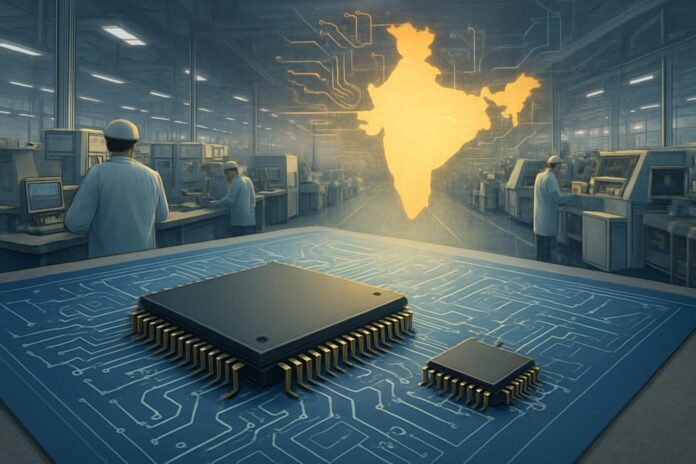
CII highlights need for domestic technology ownership to strengthen India’s electronics sector
India’s electronics industry, valued at an impressive ₹13.11 lakh crore, is currently at a crossroads where expanding production scale alone will not guarantee technological self-reliance or leadership. The Confederation of Indian Industry (CII) has issued a compelling call for India to deepen its technology ownership by moving beyond mere manufacturing to owning products, technology, and intellectual property.
The call for a paradigm shift in India’s electronics strategy
In its recent report titled Making India a Product Nation: From Making Electronics to Owning More of What Is Made, the CII emphasised that a strategic transformation is critical to enhance the domestic control of technology, product design, and essential components within India's electronics ecosystem. The report was formally released on 29 November 2026 during the ninth Electronics Summit held in New Delhi by Sushil Pal, Joint Secretary at the Ministry of Electronics and Information Technology.
India has made significant strides in electronics manufacturing, supported by initiatives such as the Make in India campaign for electronics, but CII’s analysis points out that simply increasing output volumes does not equate to technological sovereignty or innovative leadership in this rapidly evolving sector.
Owning technology and intellectual property: why it matters
The CII report identifies that controlling the design and intellectual property of electronic products and components is key for India’s ambitions to become a global product nation. Technology ownership leads to greater competitive advantage, reduces dependency on imports, and builds resilience against global supply chain disruptions, a lesson reinforced by recent international uncertainties.
One focus area highlighted by experts at the summit was the need for India to nurture research and development in semiconductor design, advanced component manufacturing, and product innovation. This aligns with government efforts like the Semiconductor and Display Manufacturing Programme, aiming to develop indigenous capabilities and attract investments in high-tech sectors.
Challenges and pathways for India to become a product nation
While India has nurtured a substantial electronics manufacturing base, challenges remain in getting Indian companies to lead in intellectual property creation. The ecosystem requires enhanced collaboration between industry, academia, and government to foster innovation, improve technology transfer, and build quality infrastructure.
The CII report also underscores the need for more skilled workforce development oriented toward R&D and design, besides manufacturing skills. Strengthening protection of intellectual property rights and facilitating startups that focus on innovative electronics products are pivotal steps.
Callout: CII’s report urges India to cultivate technology ownership to secure its future in the global electronics industry.
India’s electronics market is poised for continued growth, but the real competitive edge will come from owning and innovating technologies. Industry leaders believe that successfully transitioning from a manufacturing hub to a product creator will open new avenues for economic growth and technological leadership.
Broader implications for India’s technology and economic landscape
Strengthening product and technology ownership in electronics can significantly impact India’s broader economic ambitions. It can lead to higher value addition, trigger greater foreign and domestic investments, and enable India to compete with global giants in technology-driven exports.
Moreover, the move aligns with India’s goal to boost domestic research and development intensity as a percentage of GDP and foster self-reliance under the Aatmanirbhar Bharat (Self-Reliant India) initiative. The potential downstream effect includes job creation in advanced manufacturing, engineering, software, and services linked with electronics products.
The report launches a broader conversation among policymakers, industry stakeholders, and academia about redrawing India’s technology roadmap in electronics. As the sector gears up for future advancements like 5G, Internet of Things (IoT), artificial intelligence (AI), and electric vehicles, controlling underlying technologies will be decisive.

